




Quick Summary
- Treat vinyl record collection moving as a crate-by-crate project so nothing gets reshuffled out of order.
- Heat and pressure, not ordinary bumps, cause most warping in a poorly planned move.
- Rare and first-pressing records deserve individual sleeves and a labeled, protected spot.
- A short acclimation period after arrival helps records and gear settle before they go back into use.
Vinyl record collection moving goes smoothly when it is planned crate by crate instead of box by box. A collector’s shelves are usually organized by genre, artist, or era, and once that order is lost, rebuilding it can take longer than the move itself. Lincoln Moving & Storage plans record moves around keeping that organization intact, protecting the vinyl from heat and pressure, and giving turntables and amplifiers their own careful handling. This guide walks through sorting, packing, climate control, and the short settling period that helps a collection and its gear come back online at the new home.
Why Vinyl Record Collection Moving Starts With Sorting
Before a single record goes into a box, walk the shelves and decide how the collection will be packed: by genre, by artist alphabetically, or in whatever order the owner actually uses it. Whatever the system, keep it consistent through the move so unpacking is a matter of placing crates in order rather than resorting hundreds of records from scratch.
This is also the moment to separate out anything that needs special handling. First pressings, colored vinyl, picture discs, and anything with collectible value should be identified now, not discovered halfway through packing when there is less time to protect them properly.
Box Weight and Vertical Packing, Done Right
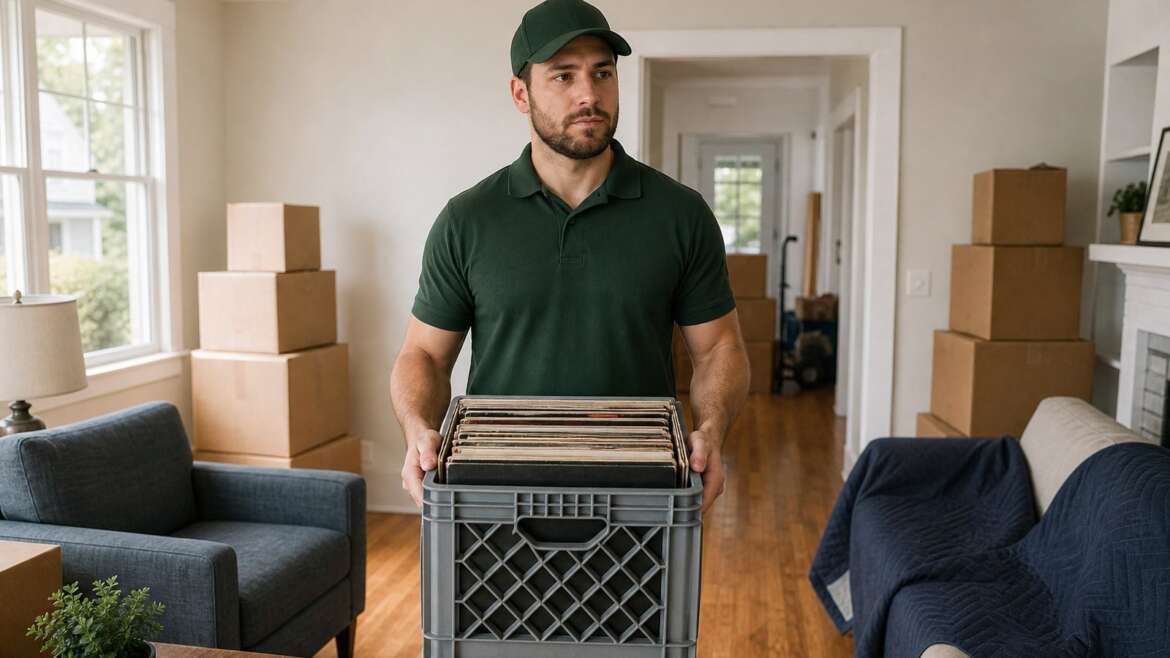
Records belong in small, sturdy boxes or crates, packed standing on edge and snug enough that nothing can lean or slide, never flat and never loose. A box that is too full to close without force is too full; back off a few records rather than forcing the lid.
Keep box weight manageable, generally in the range a single person can lift without strain, since heavy overloaded boxes are a common source of dropped or crushed corners. Label each box with its genre or artist range so the crew and the owner can match it to the right shelf on arrival.
Protecting Rare and First-Pressing Records
Valuable records deserve individual poly outer sleeves if they do not already have them, and any loose inserts, posters, or lyric sheets should stay inside their matching jacket rather than floating free in the box. Pack these records in a labeled box of their own so they get handled with extra care and are easy to find first on move-in day.
If a portion of the collection has real appraised value, photograph the most significant pieces and keep any documentation of condition or provenance with the move file, the same way we recommend for other collectibles in our guide to fine art moving.
Heat, Cold, and Why Climate Control Matters for Vinyl
Vinyl softens in heat well below what feels uncomfortably hot to a person, so a box left in a parked truck on a sunny day, or stacked near a heat vent during a move, is at real risk of warping. Cold is gentler on the vinyl itself but makes it more brittle, so records should still be handled carefully until they return to room temperature.
Keep record boxes out of direct sun during loading and unloading, avoid leaving them in a vehicle longer than necessary, and if a move requires any gap between homes, choose climate-controlled storage rather than a standard unit. Our short-term storage during a move explains how to plan that kind of transition.
Turntables and Amplifiers Need Their Own Plan
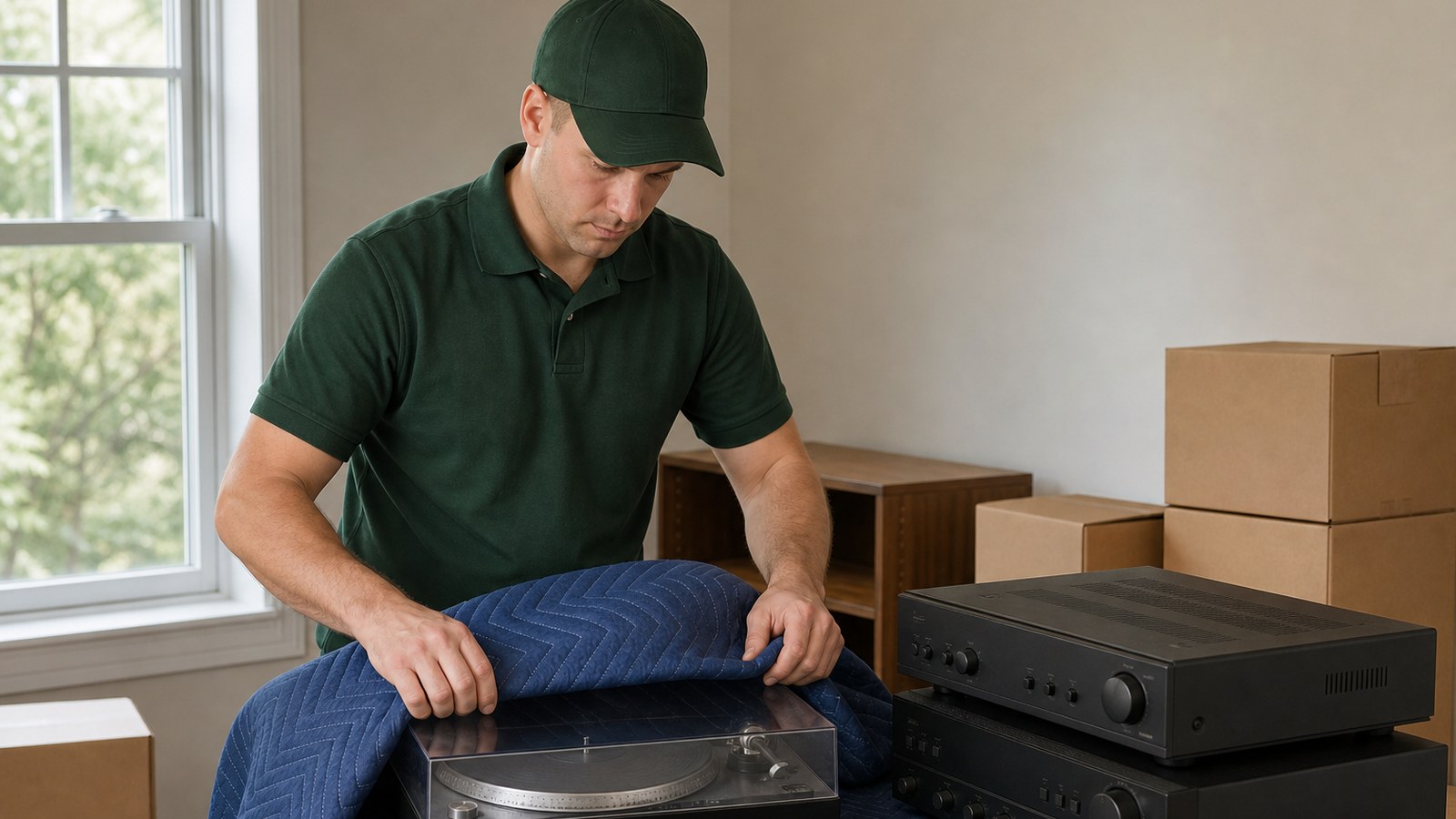
A turntable should travel in its original box when possible, with the tonearm secured and the cartridge protected or removed per the manufacturer’s guidance. Without the original packaging, wrap it well and box it upright, separate from records and other gear, so nothing crushes the tonearm assembly.
Amplifiers and receivers should be wrapped, boxed, and labeled with their cables bagged separately. Keep all audio gear out from under heavier furniture or boxes in the truck, and load it in a position where it will not shift during the drive.
Reshelving and Letting the Collection Settle
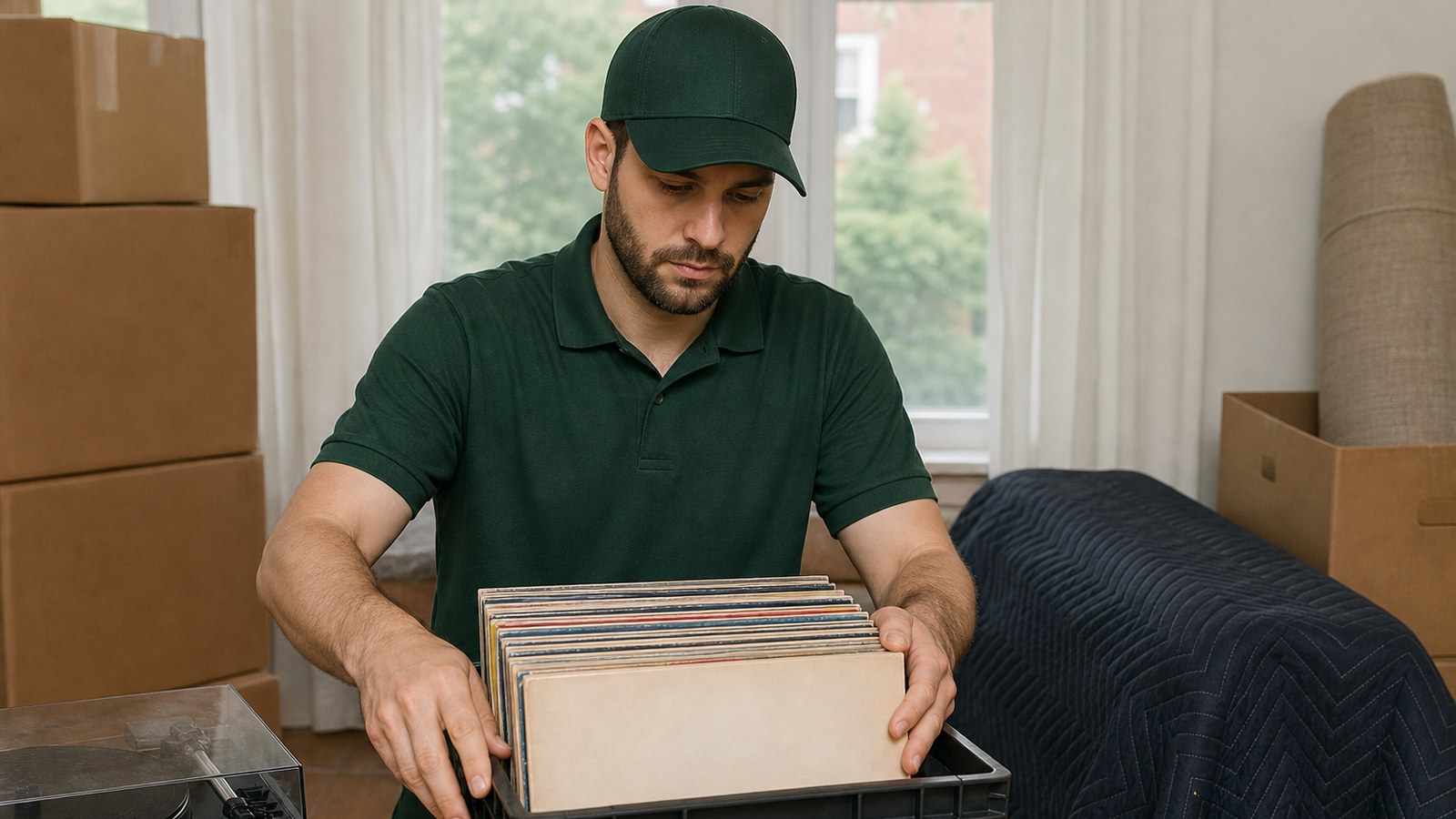
On arrival, let boxes acclimate to room temperature for a short period before unpacking, especially after a hot or cold trip, so any condensation has time to clear before jackets and sleeves are handled. Then reshelve crate by crate, following the same order used when packing.
If your move covers a full household alongside the collection, our moving day checklist explains how storage and moving day work together, and our residential moving service is the place to start if you want to talk through how we plan for a large or valuable collection.
Frequently Asked Questions
What is the safest way to pack a large record collection?
Sort by the system you actually use, pack standing on edge in small boxes, and label each box by genre or artist range so reshelving matches your original order.
Can vinyl records be damaged by heat during a move?
Yes, and heat is the most common cause of warping. Records soften at moderate temperatures, so keep boxes out of direct sun and avoid leaving them in a parked vehicle.
Do rare records need different packing than the rest of the collection?
Yes. Individual poly sleeves, a labeled box, and extra padding are worth the time for first pressings, colored vinyl, or anything with real collectible value.
Should a turntable be packed with the records?
No. Turntables should be packed and handled separately, ideally in their original box, since the tonearm and cartridge need protection that record boxes do not provide.
Ready to plan your project? Talk with Lincoln Moving & Storage about what you need, or start with our residential moving service.