





Quick Summary
- Climate is the biggest hidden risk in musical instrument moving, ahead of drops and bumps.
- Know each instrument’s weak point, then match the case and padding to it.
- Keep transit short, avoid temperature extremes, and let cases sit closed after arrival.
- Document valuable instruments and confirm coverage before the truck is loaded.
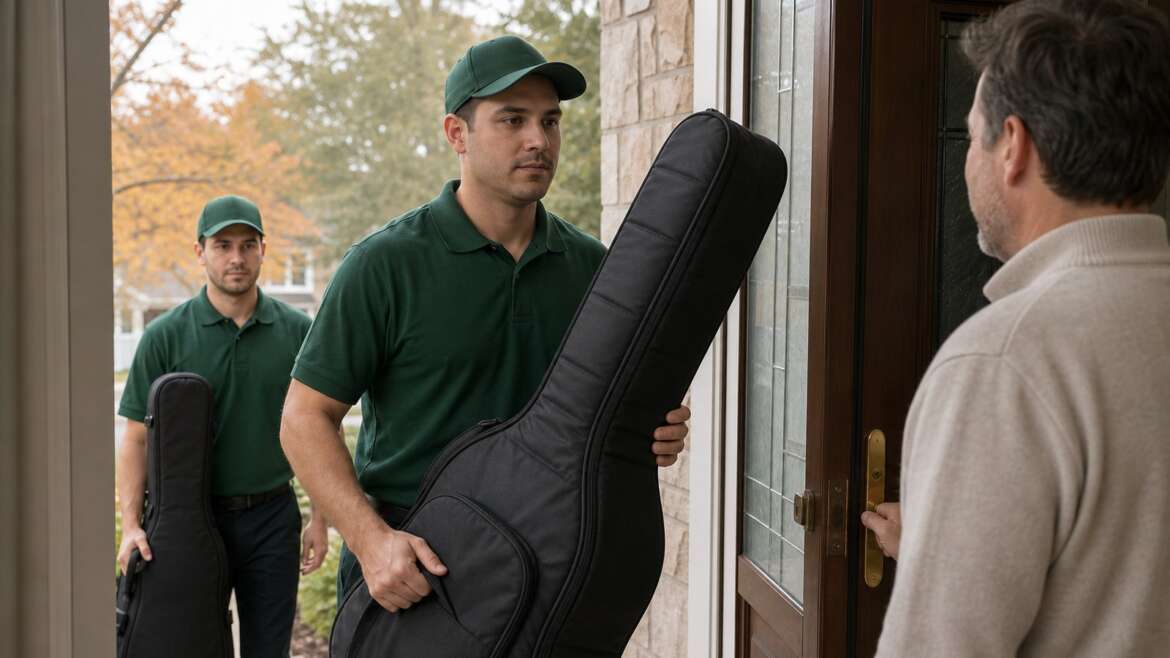
Musical instrument moving is often planned around cases and padding, but the first thing to plan is climate. A guitar that is fine in a 70-degree living room can develop finish checks or a lifted brace after an hour in a cold truck, and a violin can go out of adjustment when humidity swings from one house to the next. Lincoln Moving & Storage crews plan instrument moves so the instrument spends as little time as possible in extreme conditions, then gets a gentle re-entry at the new home. This guide starts with climate, moves through packing and timing, and finishes with the first 24 hours after arrival, when many instrument problems actually show up.
Why Musical Instrument Moving Starts With Climate, Not Cases
Wood is the material most instruments share, and wood moves with humidity. Guitars, violins, cellos, pianos, and many woodwinds are built from thin, seasoned wood held in tension by glue and hardware. When humidity or temperature changes quickly, the wood expands or contracts faster than the joints can accommodate, and that is how cracks and lifted seams start.
New Jersey adds seasonal swing. Winter moves can expose instruments to freezing air, and summer moves can bring heat and humidity. A plan that treats the case as protection against bumps but ignores temperature is only half a plan. The rest of this guide is organized around keeping conditions stable and gentle.
Know Your Instrument’s Weak Point Before Packing Day
Every instrument has a place where damage usually starts. Guitars and violins are vulnerable at the neck joint and the headstock, brass instruments at the bell and slides, woodwinds at their keywork and pads, drums at the shells and heads, and keyboards at the keybed and connectors. Identifying that weak point tells you what to protect first.
Walk through your collection and note the weak point and the approximate value of each instrument. This list helps the crew choose padding and handling, and it doubles as documentation if you later need to file a claim. Include serial numbers and take photographs of each instrument from several angles.
The Case-and-Pad Method for Wood, Brass, and Electronics
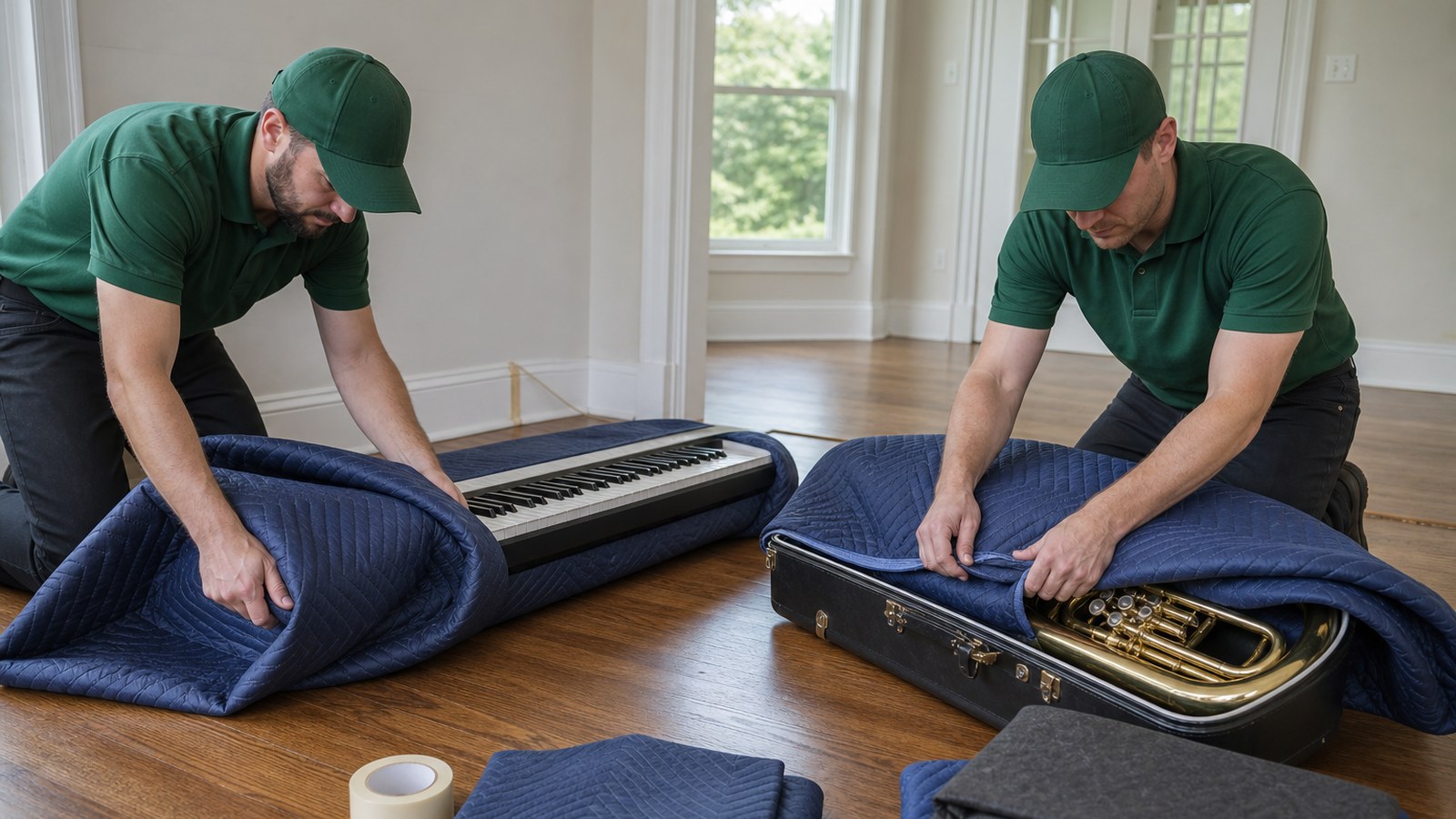
The case-and-pad method uses two layers. The instrument goes into its fitted hard case with the interior padded so it cannot shift, then the closed case is wrapped in a moving blanket or foam to add impact and temperature buffering. Wooden instruments benefit from the second layer because it slows temperature change in transit.
For electronics such as digital pianos and amplifiers, remove cables, protect knobs and controls, and keep units away from moisture. Bag and label accessories so nothing is lost. Instruments should never be stacked under other cargo; each one deserves its own strapped position on a pad.
Door-to-Door Timing: Keep Instruments Out of Extremes
Timing is the cheapest protection available. Load instruments as late as possible, keep the truck door closed to hold interior temperature, and unload them early. On cold days, warm the truck cab and start loading indoors so cases do not sit in freezing air; on hot days, avoid direct sun and leave no instrument in a parked truck.
If a move has a gap between move-out and move-in, do not use the truck as storage. Indoor storage is a better choice for instruments, which is one reason our how to choose a storage unit in New Jersey matters in a longer transition. For a full-home plan around instruments, our moving day checklist can help coordinate the day.
The First 24 Hours: Acclimating Instruments at the New Home
When the cases arrive, bring them inside and leave them closed. Give them time to adjust to the temperature and humidity of the room before opening, several hours at minimum after a cold or hot trip and longer when the difference was extreme. Opening a case too soon can trigger condensation and sudden finish changes.
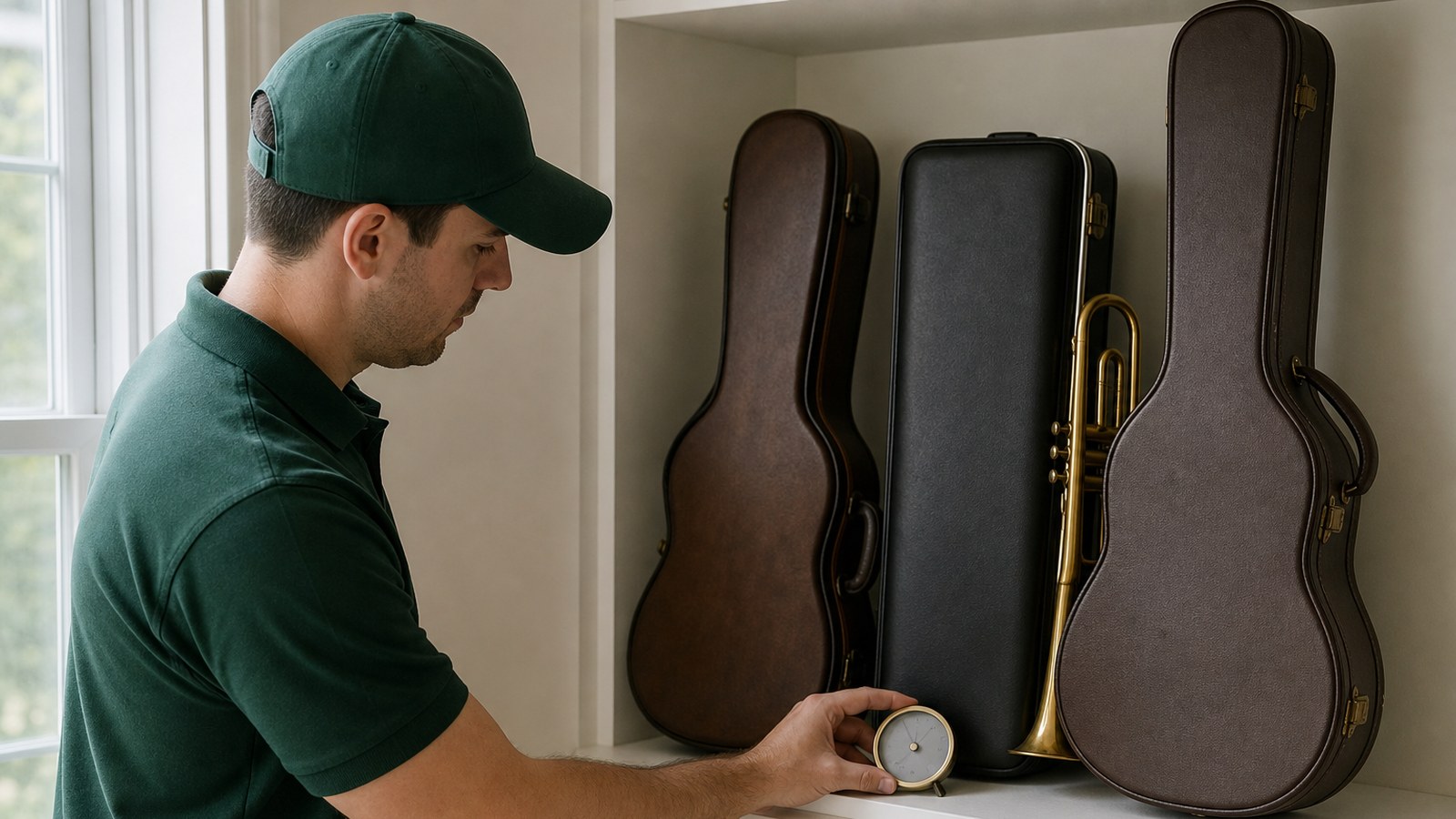
Once acclimated, check each instrument. Look for cracks, lifted seams, loose hardware, and changes in the strings or pads, and then retune gradually. Keep instruments away from heating vents, fireplaces, and direct sunlight, and aim for a stable room at moderate humidity. A small humidity gauge, or hygrometer, near the instruments makes the room’s condition visible.
Valuation, Appraisals, and Documenting High-Value Instruments
A standard moving estimate does not automatically account for what a vintage guitar or a professional-grade instrument is worth. If an instrument has significant value, gather any appraisal or purchase records, photograph its condition, and discuss valuation coverage with your mover before the move. Your homeowners or renters policy may also have limits for musical instruments, so check it.
Lincoln Moving & Storage can walk through your instruments ahead of time and recommend packing and loading for each. To plan your move, look at our residential moving service or use our contact page to schedule a conversation about your collection.
Frequently Asked Questions
Why should instrument cases stay closed after a move?
Cases should stay closed while they adjust to the new room. Opening a cold or hot case too soon can cause condensation and rapid changes that stress wood and finishes.
How long should instruments acclimate?
Several hours at minimum after a normal move and longer after extreme temperatures. When conditions were harsh, waiting overnight is a safer choice.
What humidity is best for wooden instruments?
Moderate and stable, commonly cited as roughly 40 to 50 percent relative humidity for many wooden instruments. Ask your instrument’s maker for specific guidance.
Does a standard move cover a valuable instrument’s full worth?
Not automatically. Ask about valuation coverage, keep appraisals and photos, and check what your own insurance policy says about instruments.
Ready to plan your project? Talk with Lincoln Moving & Storage about what you need, or start with our contact page.