






Quick Summary
- Lincoln sorts a home workshop move by tool category first, since machinery, hand tools, and chemicals each need different handling.
- Heavy stationary machinery needs weight-distribution planning before it ever reaches the moving truck.
- Hazardous shop chemicals like solvents and propane need a disposal or self-transport plan well before moving week.
- A garage floor plan made before the move prevents heavy tools from being set down and relocated twice.
Home workshop moving, at Lincoln Moving & Storage, works the way a machinist approaches a job: measure first, then act. A garage or basement shop is rarely just “stuff in boxes.” It is a mix of heavy stationary machinery, hundreds of small hand tools and fasteners, and a shelf of chemicals that most carriers will not transport under any circumstances. Rather than treating the workshop as an afterthought once the living spaces are packed, our crews start every home workshop moving job with a tool-by-tool inventory, because the plan for a drill press is nothing like the plan for a coffee can full of screws. This guide covers how we sequence a workshop move from first walkthrough to final garage setup.
Starting Home Workshop Moving With a Tool-by-Tool Inventory
Most moving plans work room by room: pack the kitchen, pack the bedroom, pack the garage. A workshop breaks that pattern, because the garage usually contains the single heaviest object in the house outside of major appliances, alongside dozens of small items that weigh almost nothing individually but add up fast in aggregate weight if boxed carelessly.
Lincoln’s crews start a workshop move with a tool-by-tool walkthrough: which machines are stationary and heavy, which hand tools and hardware need bin-level organization, and which shelf items are chemicals that need a separate plan entirely. That inventory, done before a single box is taped, is what keeps a workshop move from turning into the slowest, messiest part of an otherwise efficient day.
Weight Distribution for Stationary Machinery
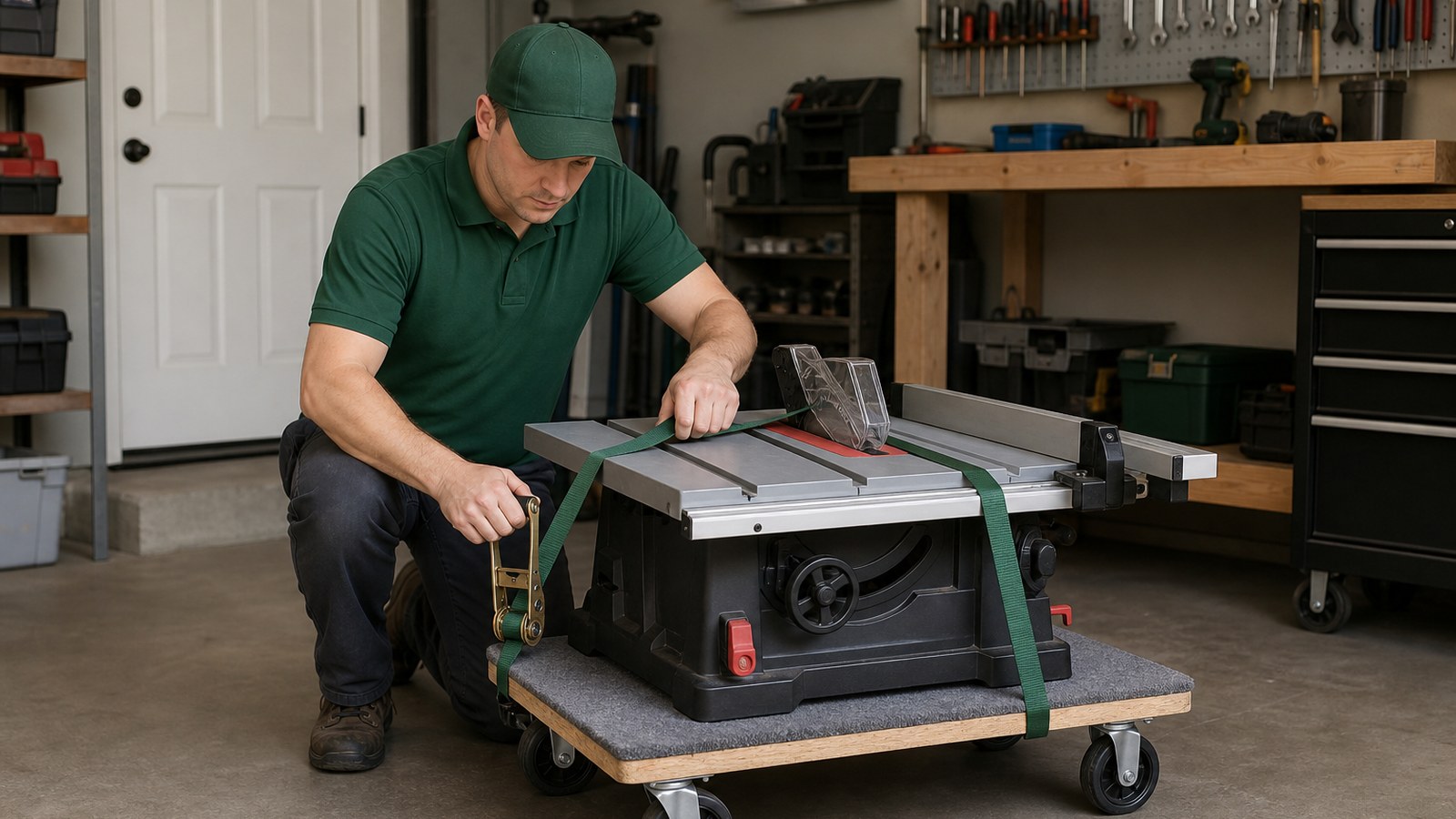
A table saw, band saw, or drill press is deceptively heavy for its footprint, and an improperly balanced lift is one of the more common injury risks in a residential move. Lincoln’s crews use furniture dollies rated for the load and, on the heaviest cast-iron tools, the same appliance-grade strapping used for a washer or a gun safe, because the center of gravity on a stationary tool shifts the moment it tilts even slightly off its base.
Removable components, rip fences, blade guards, extension tables, generally come off before the move and travel padded and labeled separately. Leaving them attached risks both damage to the precision-fitted parts and an unpredictable shift in the tool’s balance while it is being carried or dollied through doorways and down stairs.
Organizing Hand Tools and Small Hardware for Transport
Hand tools hold up best in their existing toolboxes or in sturdy bins taped fully shut, with weight spread across several smaller containers rather than concentrated in one box that becomes nearly impossible to lift safely. A box that looks half-full of hand tools can weigh more than a box stuffed with linens, which surprises people every move.
Small hardware, screws, washers, specialty fasteners, should stay in its organizing drawers or bins wherever possible, with each drawer taped individually before the whole unit gets wrapped, since an untaped drawer sliding open inside the truck means sorting loose screws off the truck bed later. A simple numbered-box system, cross-referenced to a short list of contents by category, turns unpacking from a search mission into a checklist.
Hazardous Shop Chemicals Need a Separate Plan Entirely
Propane cylinders, gasoline, paint thinner, solvents, and most aerosol products fall under hazardous materials rules and cannot travel on the moving truck, full stop, regardless of how well they are sealed or boxed. This is one of the most common surprises for homeowners who have had the same half-used can of stain or a spare propane tank sitting in the corner for years.
Lincoln recommends building the hazardous-materials plan into your moving timeline weeks in advance: use up what you reasonably can, bring the rest to your county’s household hazardous waste program (in New Jersey these collections are run by counties, not municipalities), and only transport small quantities yourself if your local and state rules permit it. Our guide to items that need special handling covers this same category of restricted items in more depth for the rest of the house.
Planning the New Garage Before Moving Day
A workshop move finishes well when the new garage layout is decided before the truck ever arrives, not improvised on the spot. Measure the new space, note outlet locations, and sketch where the table saw, workbench, and major storage units will sit, since a heavy stationary tool set down in the wrong spot usually means repositioning it a second time with no equipment on hand to do it safely.
If the new home needs time before the garage is ready, our short-term storage guide explains how to bridge that gap without exposing tools to moisture or security risk. Call Lincoln Moving & Storage at 800-524-0567 or visit our residential moving services page to plan a home workshop move that gets your shop running again quickly.

Frequently Asked Questions
Can Lincoln Moving transport propane tanks or shop chemicals?
No. Propane cylinders, gasoline, solvents, and most aerosol products are classified as hazardous materials and cannot be loaded on the moving truck under carrier safety rules. Use them up, dispose of them through a household hazardous waste program, or transport small amounts yourself if local rules allow it.
What is the biggest risk when moving a table saw or drill press?
Weight and balance. These tools are deceptively heavy for their footprint, and an uneven lift or an improperly strapped dolly is one of the more common injury risks in a residential move. Removable parts should come off and travel separately.
How should I pack small hardware like screws and fasteners?
Keep hardware in its existing organizing drawers or bins where possible, with each drawer taped shut individually before the whole unit is wrapped, so nothing slides open and scatters loose fasteners during transport.
Should I plan the new garage layout before moving day?
Yes. Measuring the new space and deciding where major tools and storage will go before the truck arrives means heavy equipment gets placed once in the right spot instead of being repositioned later without proper equipment on hand.
Ready to plan your project? Talk with Lincoln Moving & Storage about what you need, or start with our residential moving services page.