





Quick Summary
- Treat home library moving as a cataloging project: document the shelves before a single book is packed.
- Separate valuable, fragile, and everyday volumes because each needs a different level of protection.
- Built-in shelving and heavy bookcases need their own plan.
- If books go into storage, humidity and shelving matter as much as the box.
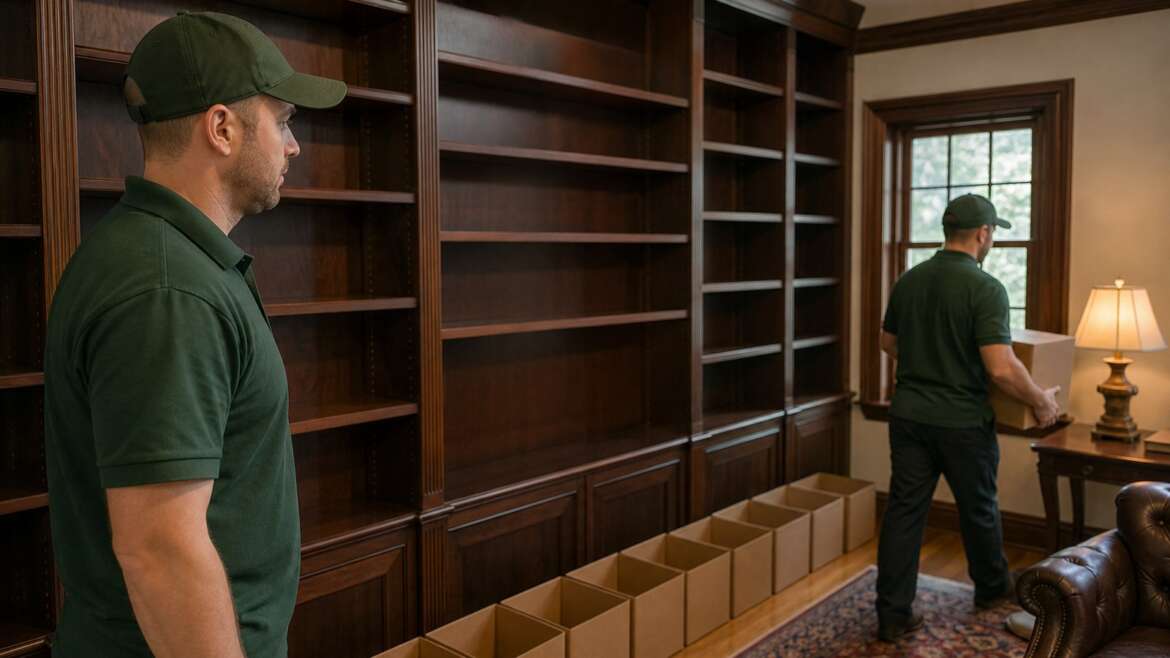
Home library moving is easiest when you treat it as a cataloging project instead of a packing project. A library is not just a pile of books; it is an arrangement, with sections, favorites, references, and a few volumes that matter far more than their shelf space suggests. Lincoln Moving & Storage crews handle libraries by preserving that arrangement, protecting the special volumes, and getting the shelving itself to the new home in one piece. This guide follows that sequence, from the photograph you take before you pack to the day you reshelve the last book in the new room.
Treat Your Home Library Moving Plan as a Cataloging Project
A library has structure. Fiction sits apart from reference, cookbooks apart from travel guides, and children’s books occupy their own shelf. If you pack without recording that structure, unpacking becomes sorting, and sorting a large collection takes days. The fix is to capture the arrangement before books leave the shelves.
Decide at the start how much detail you need. A casual collection may only need sections noted. A serious collection may justify a spreadsheet with titles, condition, and value. Whatever the level, the goal is the same: books come out in order and go back in order, with nothing lost.
Photograph Shelves and Number Boxes Before You Pack
Photograph each bookcase, shelf by shelf, before you start. Number every bookcase and box so a photo of shelf three of case two matches box two-three. Pack each shelf into its own box or a consecutive series, and mark the box numbers on the outside so the crew can place them in the right room in order.
This method turns reshelving into matching photographs to boxes. It also gives you a record if a box goes missing or is damaged. Take a moment to pull out books that should not be packed with the rest, such as first editions, signed copies, and anything fragile, and set them aside for special handling.
Protecting Valuable and Antique Volumes
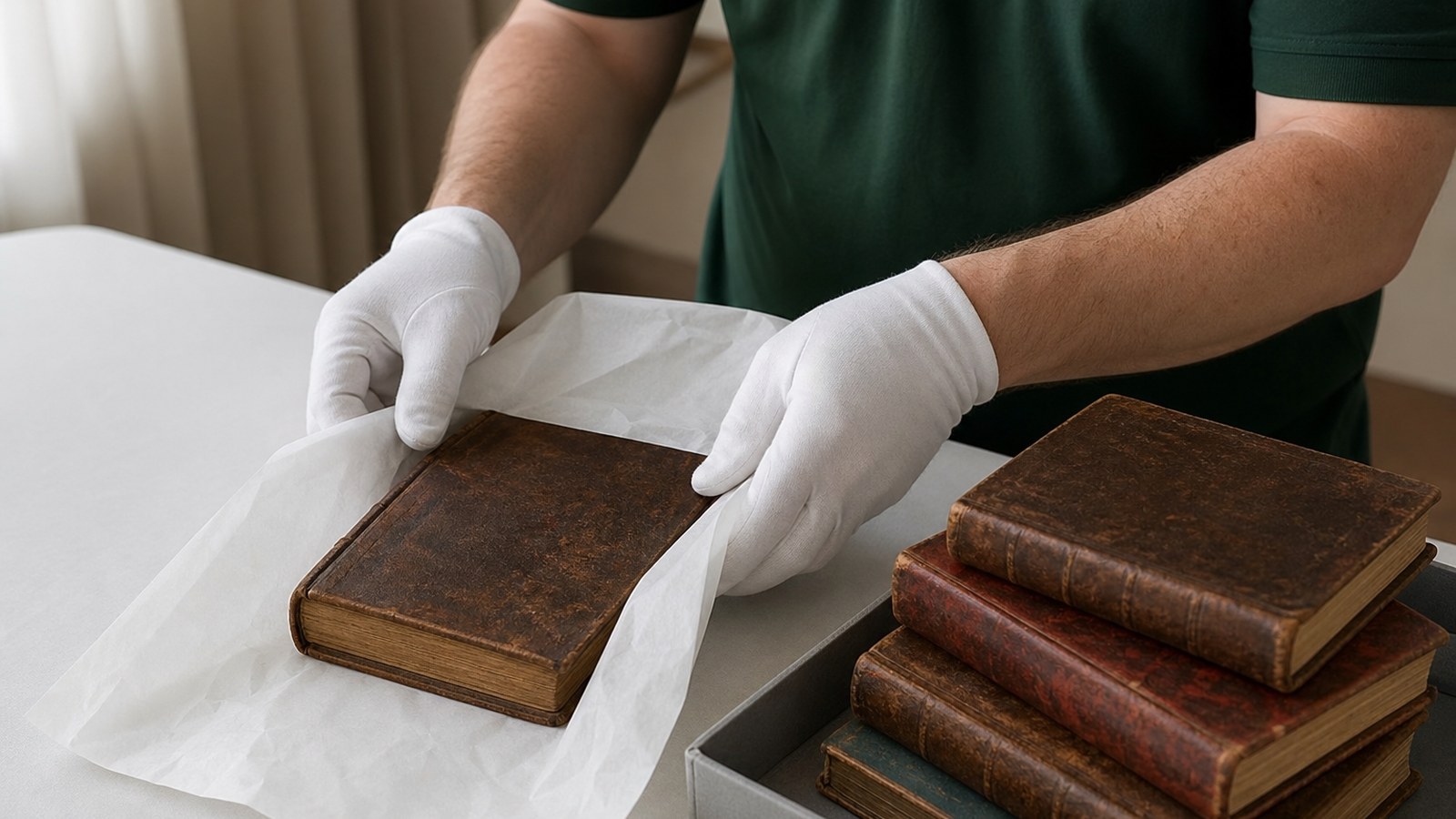
Old books are fragile in ways new books are not. Leather bindings can crack, paper can be brittle, and covers can rub against neighbors. Wrap each valuable volume in acid-free tissue, avoid rubber bands and tight plastic wrap against covers, and place the wrapped books in a snug box with soft padding so nothing shifts.
Handle them with clean, dry hands or soft cotton gloves, and never lift a book by its spine. For a truly valuable volume, consider carrying it yourself or using a specialty service. If your collection includes other collectibles, the same principles appear in our guide to fine art moving, and our piano and specialty item moving covers how we approach one-of-a-kind items.
Bookcases and Built-Ins: Moving the Furniture Itself
Bookcases are heavy, tall, and often awkward. Empty them completely before they move, remove adjustable shelves and pack them separately, and note where each shelf pin belongs. Tall units should be disassembled if the design allows, and glass doors should be removed or padded.
Built-in shelving is usually not part of a move, but if it is being removed, plan for the wall repair and the time it takes. Confirm what stays with the house and what goes, and ask your mover to include any disassembly in the estimate. Anchor tall bookcases to the wall at the new home for safety.
Short-Term Storage for Books: Humidity, Shelving, and Access
If books must wait between homes, storage conditions matter. Paper responds to humidity, and a damp or unheated space can lead to warping and mold. Climate-controlled storage with moderate, stable conditions is the safer choice, and conservators commonly cite a humidity range of roughly 30 to 50 percent for paper collections.
Store book boxes on shelves or pallets rather than directly on the floor, keep the heaviest boxes on lower levels, and leave an access aisle so you can retrieve boxes without unstacking. Our guide to storage unit size calculator explains how to size a unit, and photographing the arrangement before you lock it makes retrieval easy.

Reshelving Day: Rebuilding the Library in the New Room
Set up the bookcases first, check that they are level and secured, and then work through boxes in numbered order. Match each box to its shelf photograph and place books accordingly. Doing it this way means the library returns to the arrangement you had, without a second sorting pass.
Leave a little room on each shelf for growth, and put heavy volumes on lower shelves. If you plan the move in advance, start with our residential moving service or reach out through the contact page, and we will walk through the collection with you.
Frequently Asked Questions
What is the best way to keep my library organized during a move?
Photograph each shelf, number bookcases and boxes, and pack shelf by shelf. Matching photographs to boxes lets you reshelve in the original order.
How should I pack antique or leather-bound books?
Wrap each in acid-free tissue, avoid rubber bands and plastic against the cover, and place them in a snug box with soft padding. Consider carrying the most valuable ones yourself.
Is it safe to store books in a regular storage unit?
Only if conditions are stable. Climate-controlled storage with moderate humidity is safer, since damp or unheated units can warp pages and encourage mold.
Should bookcases be emptied before they move?
Yes. Loaded bookcases are unsafe to lift, can be damaged by the weight, and should be emptied and, where possible, disassembled.
Ready to plan your project? Talk with Lincoln Moving & Storage about what you need, or start with our residential moving service.